

Perched nearly 3,000 meters above sea level in the heart of the Andes, Quito is a city that feels both historic and alive with modern energy. As Ecuador’s capital and one of the very first UNESCO World Heritage Sites, it is a place where centuries-old plazas and ornate colonial churches coexist with vibrant markets, bustling neighborhoods, and a thriving contemporary culture. From the moment you set foot on its cobblestone streets, you are surrounded by a rich blend of Spanish, indigenous, and mestizo influences that have shaped its identity.
Towering volcanoes frame the skyline, offering spectacular backdrops at every turn, while the high-altitude setting lends the city an invigorating atmosphere. Quito is more than just a gateway to the Galápagos or the Amazon—it is a destination in its own right, filled with art, history, cuisine, and adventure that together create an experience travelers rarely forget.
10 Best Things to Do in Quito, Ecuador for an Unforgettable Trip
As the capital of Ecuador and a UNESCO World Heritage Site, it is both a modern metropolis and a living museum of colonial architecture. Travelers come for the cobblestone streets, baroque churches, vibrant markets, and jaw-dropping mountain views, but they often leave with a deep appreciation for the city’s rhythm and warmth. Whether you are here for a few days or planning a longer adventure, Quito offers experiences that mix tradition, nature, and modern creativity. Below is an extensive guide to the ten best things to do in Quito that will make your trip unforgettable.
1. Wander Through Quito’s Historic Center
The heart of Quito is one of the best-preserved colonial centers in South America. Walking through its plazas and narrow streets feels like stepping back in time. Here you will find magnificent churches such as La Compañía de Jesús, with its gilded interior, and the San Francisco Church, one of the oldest in the city. The Plaza Grande, flanked by the Presidential Palace and the Cathedral, serves as the lively hub where locals gather and cultural events take place.
Why it’s special: The blend of Spanish, Moorish, and indigenous influences in the architecture and art makes every corner worth exploring. UNESCO declared this area a World Heritage Site in 1978, the first city in the world to receive that recognition.
Tips: Wear comfortable shoes because the streets are hilly and made of cobblestones. Go early in the morning when the plazas are less crowded and the light is perfect for photography.

2. Climb the Towers of Basílica del Voto Nacional
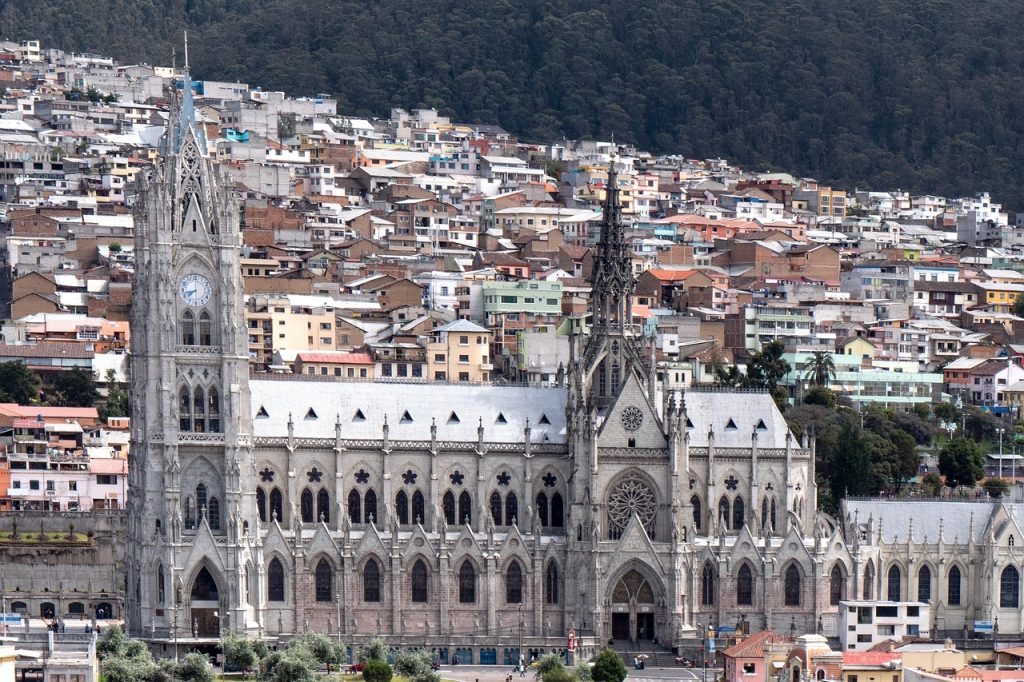
This neo-Gothic church dominates Quito’s skyline with its dramatic spires. Unlike many cathedrals, you can climb its towers via steep staircases and ladders. The reward is one of the best panoramic views of the city, framed by the surrounding mountains and volcanoes. The gargoyles shaped like iguanas, armadillos, and tortoises are a quirky touch that reflects Ecuador’s unique wildlife.
Why it’s special: Few churches allow you such adventurous access. Standing on the high balconies gives you a new perspective on the vastness of Quito and its setting in the Andes.
Tips: If you are afraid of heights, prepare yourself because some ladders are steep and exposed. The climb is easier in the morning when crowds are lighter.
Also read: 7 Best Hikes in Honolulu for Every Type of Adventurer in 2025
3. Take the TelefériQo to the Slopes of Pichincha Volcano
The TelefériQo is a gondola lift that carries visitors from the edge of the city up the slopes of the Pichincha volcano to more than 4,000 meters in altitude. The ride itself provides sweeping views, and at the top you can hike trails, take photos of Quito stretching below, or simply enjoy the fresh mountain air. On clear days, you can see other snowcapped peaks in the distance, including Cotopaxi.
Why it’s special: The contrast between the bustling city and the silent high-altitude landscape is dramatic. It is one of the easiest ways to access breathtaking mountain scenery without leaving the city.
Tips: Dress warmly, as temperatures drop significantly at higher elevation. Move slowly and stay hydrated to avoid altitude sickness.
4. Visit La Mitad del Mundo (Middle of the World)
Just outside Quito lies the famous monument marking the equator line. While the monument itself is not placed exactly on the scientific equator, it remains a popular stop for photos with one foot in each hemisphere. Nearby, the Intiñan Museum offers interactive exhibits that explore indigenous cultures and experiments that demonstrate equatorial phenomena.
Why it’s special: Few places allow you to straddle the northern and southern hemispheres at once. It is a fun combination of science, history, and culture.
Tips: Bring a hat and sunscreen because the sun is intense at this altitude and latitude. Consider visiting both the monument and the museum for a fuller experience.
5. Explore the Museo Nacional del Ecuador
For travelers interested in history and art, the Museo Nacional del Ecuador houses an impressive collection that spans pre-Columbian artifacts, colonial paintings, and modern Ecuadorian art. The exhibits trace the country’s cultural evolution, making it one of the best places to understand Ecuador’s identity.
Why it’s special: The collection is both vast and beautifully curated, offering insight into Ecuador’s indigenous heritage and colonial past alongside contemporary artistic expressions.
Tips: Allow at least two hours to fully appreciate the museum. Many exhibits include English explanations, but even without them, the artistry speaks for itself.
6. Shop and Taste at Mercado Central
Markets in Quito are more than just shopping destinations; they are social spaces filled with colors, aromas, and local life. Mercado Central is among the most famous, known for its fresh fruits, flowers, and traditional food stalls. Here you can sample dishes like hornado (roast pork), llapingachos (potato cakes with cheese), and exotic fruit juices.
Why it’s special: Food is one of the most authentic ways to experience a culture. Eating among locals at a bustling market connects you directly to Quito’s everyday rhythms.
Tips: Try the jugo de naranjilla, a tangy juice unique to the region. Keep small bills on hand for purchases, and be prepared to negotiate slightly in non-food areas.
7. Stroll Along La Ronda
La Ronda is a picturesque street in the historic center lined with colonial houses, artisan shops, and traditional eateries. At night, the street comes alive with music, dance, and food vendors. It is one of the best places to experience Quito’s cultural heritage in a lively setting.
Why it’s special: La Ronda preserves the atmosphere of old Quito while also serving as a stage for local artists and musicians. Walking here feels intimate and vibrant at the same time.
Tips: Go in the evening for the most atmosphere. Try a canelazo, a warm cinnamon-flavored alcoholic drink popular in the highlands.
8. Admire Panecillo Hill and the Virgin of Quito Statue
El Panecillo is a hill that rises in the center of Quito, topped by a giant statue of the Virgin Mary. From here, you can see both the northern and southern parts of the city. The statue itself is notable for being one of the few depictions of the Virgin with wings, symbolizing protection.
Why it’s special: The views from Panecillo are some of the best in Quito, and the statue is an important cultural and religious landmark.
Tips: It is recommended to visit by taxi or guided tour rather than walking up for safety reasons. Go on a clear day for maximum visibility.
Also read: 17 Fascinating Facts About Mount Rinjani You Probably Didn’t Know
9. Relax in Parque La Carolina
This large urban park in northern Quito is a favorite spot for locals to jog, bike, or simply relax. It includes botanical gardens, a small lake for paddle boats, sports courts, and even a vivarium showcasing reptiles. For travelers who want a break from sightseeing, La Carolina offers a glimpse into the everyday life of Quiteños.
Why it’s special: It is both a green refuge in the city and a hub of local activity. On weekends, families gather here, creating a festive and welcoming environment.
Tips: Bring a picnic or rent a bike to explore the park more fully. The botanical garden is especially beautiful in the late afternoon.
10. Take a Day Trip to Cotopaxi or Otavalo
Quito is perfectly positioned for short excursions. To the south lies Cotopaxi National Park, home to one of the world’s tallest active volcanoes. You can hike, bike, or simply admire the dramatic snowcapped peak. To the north is Otavalo, famous for its indigenous market selling textiles, handicrafts, and jewelry. Both destinations showcase Ecuador’s natural and cultural richness.
Why it’s special: Within a couple of hours, you can move from a bustling city to high-altitude wilderness or vibrant indigenous markets. These day trips extend the diversity of experiences available in Quito.
Tips: Weather in the mountains changes quickly, so carry layers and rain protection. For Otavalo, arrive early on market day to see the busiest stalls.
Final Thoughts
Quito is a city that rewards slow exploration. It is not only a gateway to the Galápagos Islands or the Amazon but a destination worthy of its own spotlight. Between its historic treasures, artistic expressions, lively markets, and access to incredible natural landscapes, the city has something to inspire every traveler.
Spending time here means immersing yourself in Ecuador’s culture while enjoying some of the most striking views on the continent. Whether you are climbing church towers, sipping canelazo on La Ronda, or standing astride the equator, Quito ensures your trip will be one to remember.


Steven Liddell
I am an insightful travel analyst, writer, and global adventurer whose work blends deep analytical thinking with a passion for understanding the world’s cultures, landscapes, and human stories. With years of experience exploring both well-known destinations and remote corners of the globe, i have developed a unique ability to examine travel through the lenses of culture, economics, sustainability, and human behavior.
My writing goes beyond simple storytelling, i am known for my thoughtful analysis of travel trends, destination development, and the evolving relationship between people and place. From studying how tourism impacts local communities to documenting transformative journeys across continents, my work delivers clarity, perspective, and meaningful insight to readers seeking more than surface-level travel content.