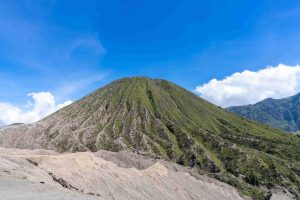

Rising majestically above the island of Lombok, Mount Rinjani is one of Indonesia’s most awe-inspiring natural landmarks. Towering at 3,726 meters above sea level, it is the second-highest volcano in the country and a magnet for adventurers, geologists, and spiritual pilgrims alike. While many know Rinjani for its demanding treks and jaw-dropping views, few realize just how rich, complex, and mysterious this mountain truly is.
Beyond its dramatic landscapes and crater lake lies a world of geological marvels, cultural legends, and ecological wonders. In this article, we uncover 17 fascinating facts about Mount Rinjani that reveal the deeper story of this extraordinary volcano—facts that even many seasoned travelers and hikers have never heard.
17 Fascinating Facts About Mount Rinjani You Probably Didn’t Know
Here are 17 fascinating facts about Mount Rinjani that will deepen your appreciation for this magnificent mountain—whether you’ve climbed it, plan to, or are just curious about the natural wonders of Indonesia.
1. Mount Rinjani Is an Active Volcano—and Still Erupts Regularly
Despite its serene appearance from afar, Mount Rinjani is very much alive. It’s an active stratovolcano, part of the Sunda Arc, a chain of volcanic mountains formed by the subduction of the Indo-Australian plate beneath the Eurasian plate. The most recent eruptions occurred in 2010, 2015, 2016, and 2021, primarily from the Barujari cone located within the massive caldera. These eruptions vary in intensity, with some spewing ash clouds and lava flows that can affect nearby villages and air traffic.
2. It Has One of the Most Spectacular Crater Lakes in the World
Mount Rinjani’s summit isn’t its only showstopper. Nestled inside its 6-by-8.5 km-wide caldera is a striking turquoise lake called Segara Anak, which translates to “Child of the Sea.” The name refers to its ocean-like color. This crater lake sits at an altitude of around 2,000 meters above sea level and is often shrouded in mist, creating an ethereal atmosphere that captivates all who see it.

3. A New Volcano Is Growing Inside the Caldera
Emerging from the edge of Segara Anak is Gunung Barujari, a small but active volcanic cone that continues to grow with every eruption. Often referred to as the “baby volcano,” Barujari has become one of the most closely monitored volcanic sites in Indonesia. It is a vivid reminder that Rinjani is not just a relic of geologic history—it’s a dynamic force still shaping the Earth today.
Also read: Bokor National Park: A Must-Visit Destination in Southern Cambodia
4. Rinjani Is Indonesia’s Second-Highest Volcano
Standing at 3,726 meters, Mount Rinjani is the second-highest volcano in Indonesia, after Mount Kerinci in Sumatra. Its height and prominence make it a prominent feature of Lombok’s skyline and a favorite target for serious hikers seeking a high-altitude challenge.
5. The Trek to the Summit Is Considered One of the Toughest in Southeast Asia
While the views from the summit are awe-inspiring, getting there isn’t easy. The Rinjani trek is known for its steep ascents, unpredictable weather, and demanding physical toll. The final summit push usually begins around 2 AM and involves scrambling over loose volcanic scree in freezing temperatures. Despite the challenge, the sense of accomplishment and panoramic sunrise view make it all worthwhile.
6. It’s Part of a National Park Rich in Biodiversity
Mount Rinjani is the crown jewel of Gunung Rinjani National Park, which spans approximately 41,330 hectares. The park is a protected area and biodiversity hotspot, home to a wide range of flora and fauna, including endangered species such as the ebony leaf monkey, Rinjani scops owl, barking deer, and various orchid species. It also serves as a vital watershed for surrounding communities.
7. The First Documented Ascent Was by a Dutch Botanist in the 19th Century
The first recorded ascent of Mount Rinjani was made by Dr. Elbert W. Veth, a Dutch botanist and explorer, in 1847. During the colonial period, Rinjani was of interest to scientists studying volcanic activity, plant life, and topography. Since then, it has become a mecca for adventurers from around the world.
8. It Holds Great Spiritual Significance for the Sasak and Balinese People
To the Sasak people of Lombok and the Balinese Hindus, Mount Rinjani is considered sacred. Both ethnic groups believe that spirits reside on the mountain, and Segara Anak lake is seen as a place of pilgrimage. Each year, a religious ceremony called Pekelan or Mulang Pakelem is held by the Balinese at the lake, where offerings are made to appease the mountain spirits.
9. The Caldera May Have Been Formed by One of the Largest Eruptions in History
Geological studies suggest that the current Rinjani caldera was formed by a cataclysmic eruption around 1257 AD, thought to be one of the most powerful in the last millennium. This eruption possibly contributed to a global climate anomaly, lowering temperatures and affecting agricultural output in distant parts of the world. Some researchers link it to historical records of a “mystery eruption” that caused the Little Ice Age.
10. You Can Soak in Natural Hot Springs Inside the Crater
After a grueling hike, few things feel better than soaking in geothermal hot springs—and Rinjani delivers. Inside the caldera, close to Segara Anak lake, are several natural hot springs fed by underground volcanic heat. These mineral-rich waters are believed by locals to have healing properties and offer much-needed relief to tired trekkers.
11. Rinjani’s Weather Is Dramatic and Unpredictable
Due to its elevation and position, Mount Rinjani experiences highly unpredictable weather patterns. Clear skies can turn into heavy fog or rain within minutes, especially during the rainy season. Temperatures near the summit can drop below freezing at night, while daytime temperatures can be scorching lower down. Trekkers must come well-prepared with layered clothing and rain gear.
12. The Trekking Season Is Limited to Preserve the Ecosystem
To prevent erosion, reduce fire risks, and preserve the natural environment, Mount Rinjani is only open for trekking during the dry season, typically from April to December. It is closed during the monsoon season (usually January to March), both for safety reasons and to allow the environment time to recover from human activity.
13. Several Routes Lead to the Summit
There are multiple trekking routes to Mount Rinjani, with the most popular being Senaru and Sembalun. The Sembalun route starts at a higher elevation and is more direct to the summit, while the Senaru route offers lush forest scenery and is often used for descending. Some multi-day treks combine both routes and include camping at Segara Anak and visits to the hot springs.
14. The Mountain Plays a Vital Role in Local Agriculture
The volcanic soil surrounding Mount Rinjani is extremely fertile, making it ideal for agriculture. Farmers in Lombok grow rice, coffee, tobacco, and vegetables in the rich soil deposited by centuries of eruptions. The mountain also provides essential water sources for irrigation and daily use through its many springs and rivers.
Also read: 5 Best Hotels to Stay in Bukit Lawang for a Unique Jungle Experience
15. Rinjani Is a Volcanologist’s Dream
Because of its complex volcanic history, active status, and multiple eruption styles, Mount Rinjani is a case study for volcanologists and geologists. Researchers monitor seismic activity, gas emissions, and ground deformation using satellites and field instruments. It serves as a vital site for understanding how volcanoes evolve over time and how to mitigate their hazards.
16. There Are Still Myths and Legends Surrounding the Mountain
Local folklore abounds around Mount Rinjani. One popular belief among the Sasak people is that the lake is guarded by an invisible dragon spirit that protects the island. Another myth suggests that the summit is off-limits to women, a traditional belief still observed by some local communities. These myths highlight the deep spiritual and cultural connection the people of Lombok have with their mountain.
17. Conservation Efforts Are Increasing—But Challenges Remain
Mount Rinjani has faced increasing environmental pressures due to the popularity of trekking. Trash accumulation, trail erosion, and disrespectful tourist behavior have threatened its delicate ecosystem. In response, the Indonesian government and local NGOs have launched conservation and clean-up initiatives, such as “Eco-Rinjani,” porters’ training programs, and sustainable tourism regulations. However, the success of these efforts depends on the cooperation of visitors and responsible tourism practices.
Final Thoughts
Mount Rinjani is more than just a mountain. It is a living entity, revered by locals, studied by scientists, and loved by travelers. From its thundering eruptions to its healing springs, from sacred rituals to summit sunrises, Rinjani tells a story that spans centuries, cultures, and ecosystems. Whether you’re drawn to its physical challenge, its spiritual energy, or its geological intrigue, Rinjani offers an experience unlike any other.
The next time you gaze upon its peak—or better yet, stand atop it—remember that you’re not just witnessing nature’s beauty. You’re standing in the midst of ancient legends, explosive histories, and enduring spiritual belief.
Mount Rinjani doesn’t just test your strength. It touches your soul.


I'm a manager of Jungle Inn Hotel in Bukit Lawang and a leading expert in Bukit Lawang eco-travel. With years of experience in sustainable tourism, i am dedicated to preserving the region’s rich biodiversity while providing authentic jungle experiences for visitors.