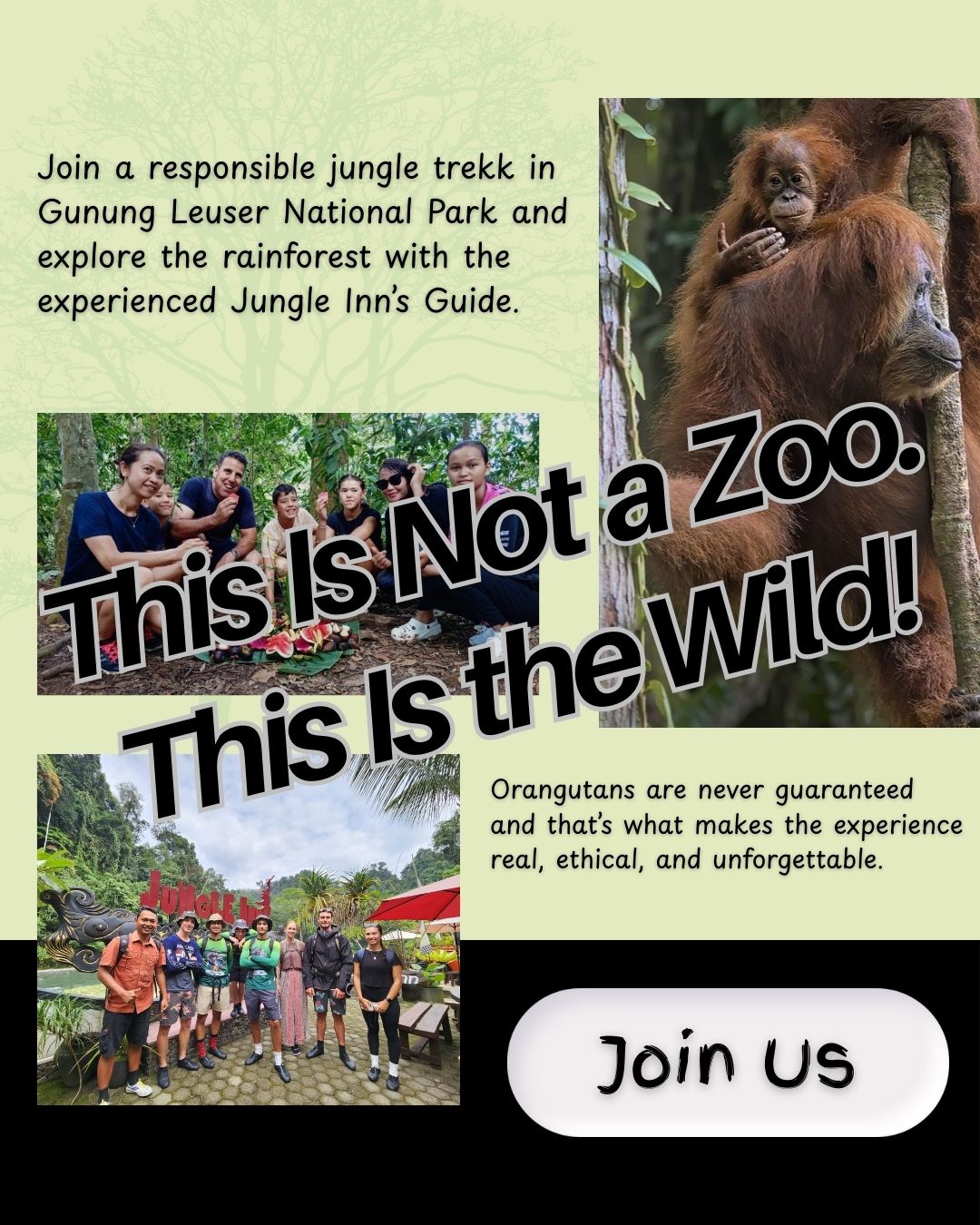

Nestled on the edge of a dense, emerald-green rainforest in North Sumatra lies Bukit Lawang — a small riverside village with a mighty reputation. It’s a place where wild rivers meet jungle trails, where you can wake up to the call of gibbons and fall asleep to the soothing rush of the Bohorok River. But most famously, it’s where you can trek into the heart of the jungle and encounter one of our closest relatives — the critically endangered Sumatran orangutan — in the wild.
Whether you’re a seasoned eco-traveler, a wildlife enthusiast, or someone simply looking to disconnect from modern life and reconnect with nature, Bukit Lawang offers a raw, immersive experience that few other places in the world can match.
In this ultra-comprehensive guide, we’ll cover everything you need to know: where Bukit Lawang is, how to get there, the best things to do, wildlife facts, conservation history, cultural insights, local food, safety tips, and how you can contribute to protecting one of the planet’s last true wildernesses.
Where is Bukit Lawang?

Bukit Lawang is located in North Sumatra, one of the westernmost provinces of Indonesia, on the island of Sumatra. Geographically, it lies about 86 kilometers northwest of Medan, the provincial capital, and is part of the Langkat Regency.
The village sits on the eastern edge of Gunung Leuser National Park (GLNP), a vast tropical rainforest that spans more than 7,900 square kilometers. GLNP is part of the UNESCO-listed Tropical Rainforest Heritage of Sumatra, one of the most biologically diverse ecosystems on the planet.
The name “Bukit Lawang” translates to “door to the hills”, and that’s exactly what it is — the gateway to one of the world’s last remaining stretches of primary lowland rainforest.
Getting to Bukit Lawang: Step-by-Step
1. Fly into Medan (KNO)
Your journey starts at Kualanamu International Airport, the largest airport in Sumatra. Medan is well connected by domestic flights from Jakarta, Bali, and other Indonesian cities. International flights arrive regularly from Kuala Lumpur, Singapore, Penang, and Bangkok.
2. Medan to Bukit Lawang
There are several ways to reach Bukit Lawang from Medan:
Private Car or Taxi
- Most comfortable and quickest way.
- Recommended if traveling in a group or with family.
- Costs around IDR 700,000–1,200,000 ($45–80).
- Travel time: 3 to 4 hours, depending on traffic and road conditions.
Also read: 10 Fascinating Facts About Jungle Ecosystems in Bukit Lawang
Tourist Shuttle
- Shared minivans can be booked through tour agencies or accommodations in Medan.
- More affordable, and usually door-to-door.
- Costs around IDR 150,000–250,000 per person.
Public Bus (Budget Option)
- Departs from Pinang Baris Terminal in Medan.
- Take the bus to Binjai, then change to a smaller bus or local angkot to Bukit Lawang.
- Long, crowded, but very budget-friendly (under IDR 100,000).
- Expect a 5–6 hour journey.
Pro Tip: The roads to Bukit Lawang are often narrow, winding, and potholed. Motion sickness medicine might be a good idea if you’re sensitive.
Why is Bukit Lawang So Special?

Bukit Lawang is world-famous as one of the best and most accessible places to see Sumatran orangutans (Pongo abelii) in the wild.
But it’s not just about orangutans — the entire ecosystem of the region is astonishing. The surrounding Gunung Leuser National Park is home to over 700 species of animals, including:
- Sumatran elephants 🐘
- Sumatran tigers 🐅
- Sumatran rhinoceros 🦏
- Siamang gibbons
- Thomas leaf monkeys
- Sun bears
- Hornbills, kingfishers, and countless other birds
A Legacy of Conservation
Bukit Lawang’s conservation journey began in 1973, when a Swiss-Indonesian NGO established a rehabilitation center for confiscated or displaced orangutans. These were often ex-pets or animals rescued from the illegal wildlife trade.
The goal: to retrain them to live independently in the wild.
Over time, as orangutans were successfully released, Bukit Lawang transitioned from a rehab site to a tourism-based conservation model. While the center closed in 2002, a community-run tourism system now thrives — one that not only protects orangutans but provides local people with sustainable livelihoods.
Jungle Trekking in Gunung Leuser National Park
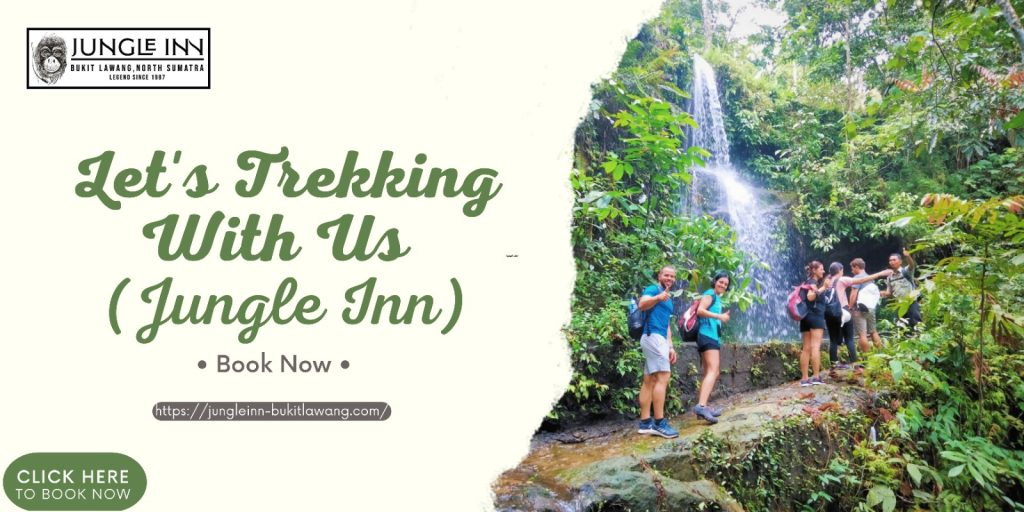
The top activity in Bukit Lawang is jungle trekking — a rare chance to hike through primary rainforest, sleep in jungle camps, and spot wild animals in their natural habitat.
Trekking Options:
| Trek Type | Duration | Highlights |
| Half-Day Trek | 3–4 hours | Spotting orangutans, short hike, ideal for families |
| 1-Day Trek | 6–7 hours | Deeper into the jungle, more wildlife encounters |
| 2-Day / 1-Night | Overnight in the jungle, campfire dinner | |
| 3–7 Day Expeditions | Hardcore hiking, river crossings, deeper biodiversity immersion |
What You Might See:
- Orangutans (both semi-wild and wild)
- Hornbills and eagles
- Thomas leaf monkeys (with spiky punk hair!)
- Water monitors and snakes
- Tracks of elephants or even tigers (though sightings are rare)
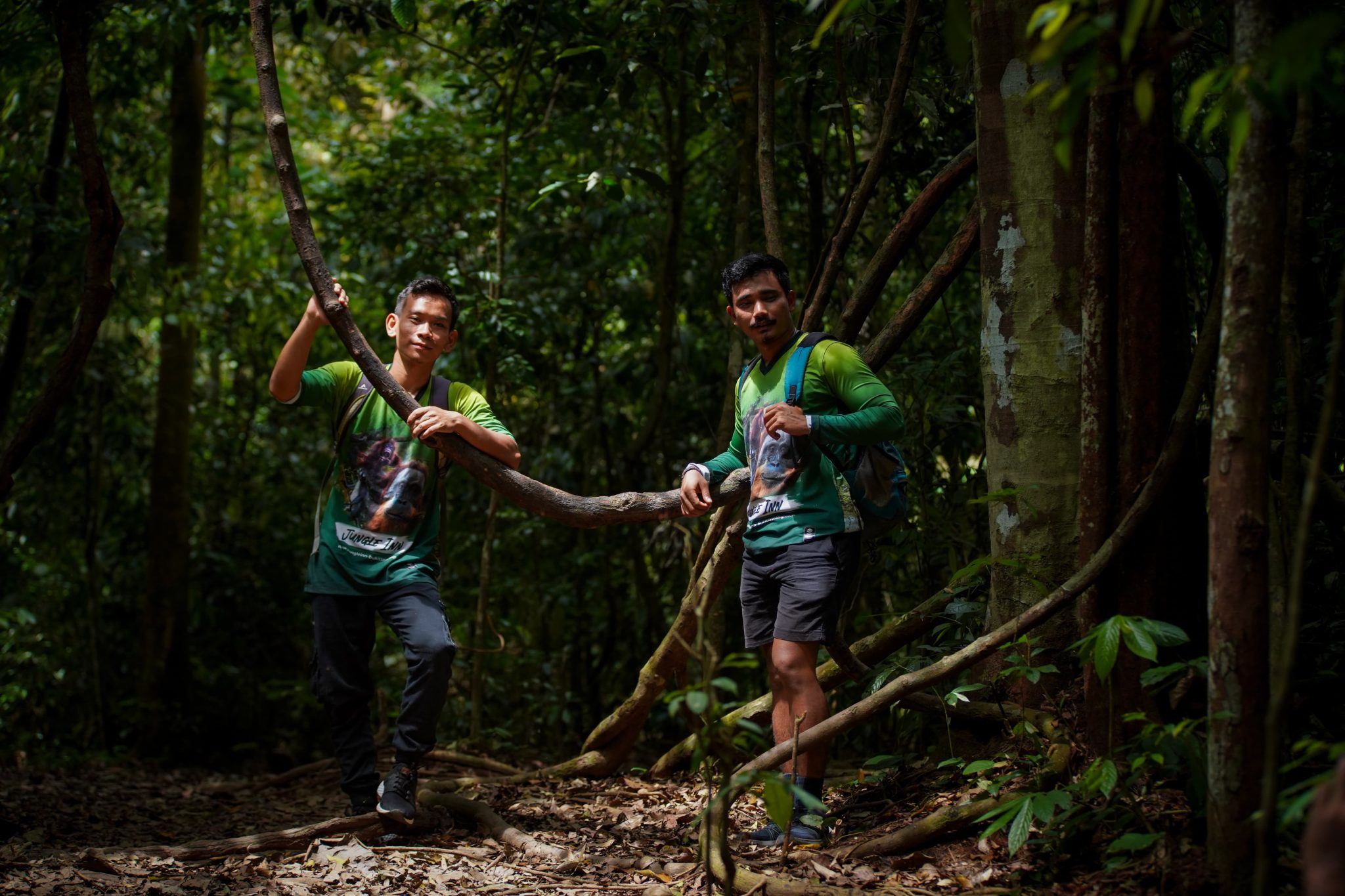
Important: Trekking without a guide is not allowed. Choose guides certified by the Bukit Lawang Guide Association. They’re trained in eco-friendly practices and fluent in English.
Other Things to Do in Bukit Lawang
1. River Tubing
- Float back to the village on an inner tube.
- Fun, refreshing, and often included as the “exit” of a jungle trek.
2. Visit the Bat Cave
- About 2 km from the village.
- Massive limestone cave filled with thousands of bats.
- Bring a flashlight and shoes with grip!
3. Village and Plantation Tours
- Learn how locals harvest rubber and palm oil.
- Visit rice fields and meet local farmers.
- Great for understanding how the community lives.
4. Cooking Classes
- Many guesthouses offer half-day or full-day classes.
- Learn to make Indonesian dishes like rendang, sambal, or tempeh curry.
5. Relax and Recharge
- Bukit Lawang is ideal for digital detox.
- Swing in a hammock. Journal by the river. Read with jungle sounds in the background.
Where to Stay: Lodges, Bungalows & Guesthouses
There’s a wide range of accommodation — rustic bamboo huts, riverside cottages, and stylish eco-resorts.
Top-Rated Places:
- EcoTravel Cottages – Eco-friendly, great staff, popular with couples.
- Jungle Inn – You might see orangutans from your balcony!
- On the Rocks Bungalow – Secluded and peaceful.
- Rainforest Guesthouse – Budget-friendly, backpacker vibe.
All rooms typically include mosquito nets, fans, and open-air bathrooms. Wi-Fi is available, but expect it to be slow and unreliable.
Travel Tips & Safety
- No ATMs in Bukit Lawang – Withdraw cash in Medan or Binjai.
- Electricity blackouts are common — bring a flashlight or headlamp.
- Insect repellent is essential.
- No Wi-Fi? No problem. Enjoy the break.
- Medical facilities are limited, so bring a basic first-aid kit.
What to Eat in Bukit Lawang
You’ll find hearty Indonesian food with some Western options:
Must-Try Dishes:
- Mie Goreng – Fried noodles
- Soto Ayam – Chicken turmeric soup
- Nasi Campur – Mixed rice with veggies and protein
- Gado-Gado – Steamed veggies with peanut sauce
- Avocado Smoothies – Fresh and creamy!
Local fruit is incredible — try mangosteen, rambutan, snake fruit, and the infamous durian.
What to Pack
- Lightweight hiking shoes or boots
- Long pants for jungle trekking
- Quick-dry clothing
- Poncho or rain jacket (especially Nov–Mar)
- Biodegradable toiletries
- Power bank and headlamp
- Refillable water bottle
- Dry bag for electronics
Best Time to Visit Bukit Lawang
| Season | Months | Conditions |
| Dry Season | May – September | Best for trekking, fewer leeches, river tubing |
| Wet Season | October – April | Greener jungle, heavier rains, more mosquitoes |
You can visit year-round, but dry season offers easier hikes and clearer paths.
How Your Visit Helps Conservation
When you travel to Bukit Lawang responsibly, your money helps fund:
- Local eco-guides and porters
- Jungle patrols to prevent illegal logging or poaching
- Community waste management projects
- Conservation education for local kids
- Reforestation efforts
It’s not just a trip — it’s a chance to be part of something bigger.
Also read: 7 Essential Items to Pack for a Bukit Lawang Jungle Trek
Useful Bahasa Indonesia Phrases
- Selamat pagi – Good morning
- Apa kabar? – How are you?
- Terima kasih – Thank you
- Tidak, terima kasih – No, thank you
- Berapa harganya? – How much is it?
- Bagus sekali! – Very good!
Final Thoughts
Bukit Lawang is more than a destination — it’s a movement. It represents what eco-tourism can and should be: a way to explore breathtaking nature while preserving it, to encounter wildlife ethically, and to help local communities thrive.
If you’re seeking a unique, meaningful travel experience that goes beyond sightseeing and selfies, then this remote jungle village in Sumatra might just change the way you see the world.So the next time someone asks “Where is Bukit Lawang?”, you’ll know it’s not just a place — it’s a story of survival, sustainability, and unforgettable adventure.


I'm a manager of Jungle Inn Hotel in Bukit Lawang and a leading expert in Bukit Lawang eco-travel. With years of experience in sustainable tourism, i am dedicated to preserving the region’s rich biodiversity while providing authentic jungle experiences for visitors.