
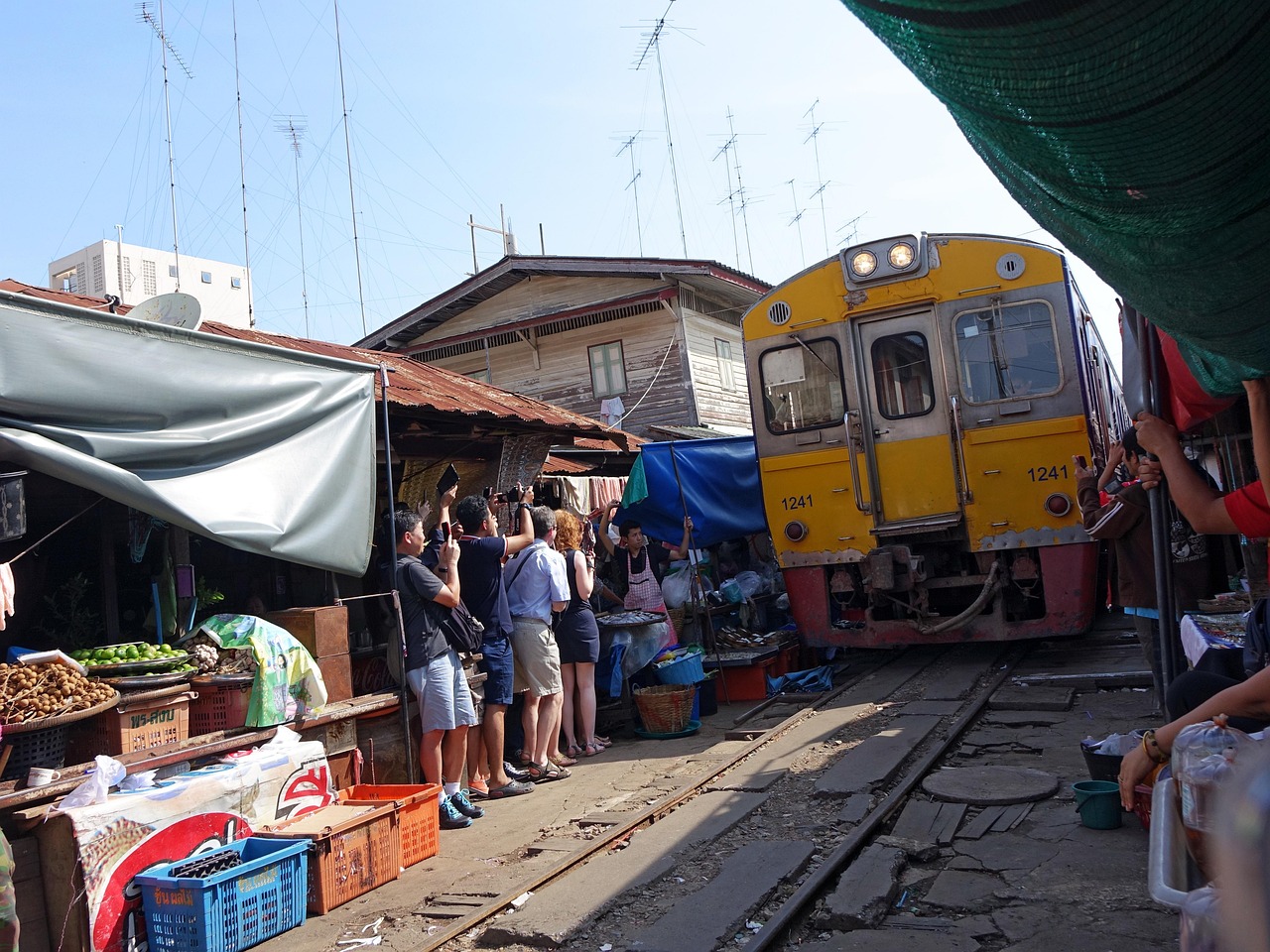

Markets are more than places to buy goods they reflect culture, community, and the rhythms of daily life. But among the world’s thousands of markets, few are as remarkable and unforgettable as Maeklong Railway Market in Thailand. Known locally as Talad Rom Hoop the “umbrella pulldown market” this extraordinary place operates directly on an active railway line. Each day, vendors set up stalls along the rails, and when a train approaches, they swiftly retract umbrellas and move goods aside only to resume business moments later once the tracks are clear.
This dynamic interplay between commerce and transport has made Maeklong Railway Market a global curiosity and a must-visit attraction for travelers seeking something truly unique. In this definitive guide, we explore what makes Maeklong Railway Market so unusual, its history, how it operates, what visitors can expect, and practical tips for anyone planning a visit.
A Market Like No Other: What Defines Maeklong Railway Market
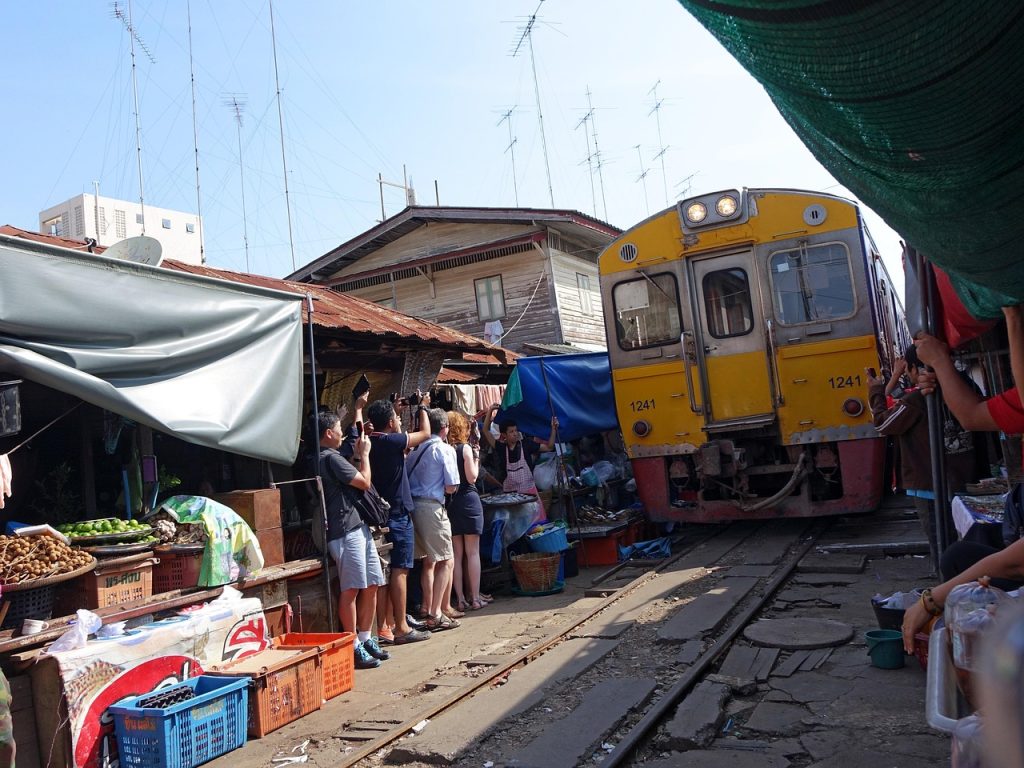
Imagine browsing through fresh produce, seafood, flowers, and snacks only to hear a train approaching. Vendors begin to fold back their umbrellas and retract awnings while shoppers step back a few feet to allow the train to pass. Within moments, the train has rolled through, and the market effortlessly returns to normal as though nothing unusual has occurred.
This daily performance part market and part local rhythm of life is the defining feature of Maeklong Railway Market. The tracks cut straight through the market’s heart, and vendors conduct business on both sides of the rails. The entire community has learned to adapt to the train’s schedule, turning an ordinary transportation route into the stage for one of the most unusual markets on the planet.
Unlike staged tourist events, this is genuine local life. Goods, stalls, and customers share space with the train not as a spectacle, but as a simple part of daily livelihood.
Also read: Top 10 Must-Do Activities in Labuan Bajo for Nature Lovers
History and Origins of the Railway Market
The origins of Maeklong Railway Market are rooted in practicality rather than novelty. The railway line was established decades ago to connect Thailand’s central region with coastal areas. Over time, local vendors set up their stalls along the tracks because the location offered easy access to farmers, fishermen, and customers traveling between towns.
Rather than relocate the market, the community adapted around the railway. Structures were built close to the rails, and a rhythm developed vendors, residents, and even the trains learned to coexist. Rather than seeing the train as a disruption, it became folded into everyday commerce.
Today, the market’s unusual character has drawn international attention. But for locals, it remains fundamentally a place to work, sell, and meet neighbors with the train merely part of the backdrop.

What You’ll Find at Maeklong Railway Market
Although the train is the main attraction for many visitors, the market itself is a lively, bustling place with rich local flavor. A typical visit reveals:
Fresh Seafood
Because the market is near coastal waters and fishing communities, fresh fish, squid, shrimp, and shellfish are prominent. Vendors display their catches on ice, drawing both locals and visitors.
Produce and Fruits
Seasonal fruits, herbs, and vegetables fill tables and crates. Thailand’s famous tropical fruits such as mangosteen, rambutan, and durian make colorful appearances during their seasons.
Prepared Foods and Snacks
Delicious street food abounds. Expect grilled meats, fried snacks, noodles, sweet desserts, and freshly prepared treats. This is as much a place to eat as to shop.
Clothing and Everyday Goods
Alongside food, the market offers clothing, accessories, household items, and goods for daily use, making it an authentic reflection of local life.
Flowers and Miscellany
Bouquets, garlands, and ornamental plants add fragrance and color to the market’s sound and rhythm.
The result is a sensory journey vibrant colors, rich aromas, and animated haggling are all part of the experience.
How the Train Passing Works: Timing and Technique
The spectacle of the approaching train and how the market responds is what truly distinguishes Maeklong Railway Market. Here’s how it works:
Train Schedule
Trains pass through the market several times a day. The schedule can vary, but typically there are morning and afternoon departures that bring the train through the narrow track.
Vendor Response
Vendors have perfected quick, practiced movements. Umbrellas, awnings, and signage are designed to retract or fold inward at a moment’s notice. Produce and goods are placed just outside the normal path of the train, often on low platforms or mats.
Minimal Disruption
Though it may appear chaotic to an outsider, the process is orderly and efficient. The price of this efficiency is adaptability: plastic tarps, folding tables, and movable baskets are the norm.
Train Movement
The train itself moves slowly through the market at walking speed giving time for both vendors and visitors to clear the tracks and resume their positions afterwards. The entire process, from announcement to departure, lasts only a few minutes.
This routine unfolds like choreography, and witnessing it gives insight not just into the mechanics of the market, but into the community’s rhythm and resilience.
Best Ways to Experience the Market
For first-time visitors, experiencing Maeklong Railway Market is more than simply showing up. Planning your visit with timing and respect for the local rhythms enhances the experience.
Arrive Early
Arrive well before a scheduled train entry to observe the market in regular operation and see how vendors prepare. This also allows you to explore the food and goods without a crowd.
Observe Train Times
Ask locals or market staff for the approximate train schedule. While it can vary, most trains pass at predictable times each day. Arriving about 20–30 minutes before a train’s expected arrival gives you a front-row vantage point.
Stay Safe
When the train approaches, step back from the rails, respect barriers, and follow local guidance. Don’t stand on the track or restrain vendors from doing their jobs.
Enjoy the Food
Sample local delicacies before or after the train passes. Some visitors make lunch part of the experience, combining sightseeing with a meal.
Photography Respectfully
While it’s tempting to take pictures and videos, ensure that your photography doesn’t interfere with the market, the vendors, or the train’s operation. Respect local life and avoid blocking aisles or obstructing the tracks.
Understanding the Local Culture
To truly appreciate Maeklong Railway Market, it helps to understand its place within Thai culture and community life:
Adaptability
Thai markets have long been spaces of ingenuity and adaptability. The ability of vendors to function beside an active railway reflects this trait a practical response to shared space rather than a tourist gimmick.
Community
For many locals, the market is not just a place to sell goods it is a social hub where neighbors exchange news, catch up with friends, and maintain long-standing relationships.
Respect for Routine
There is a cultural emphasis on respect for routine and cooperative action. When the train comes, everyone moves gently but efficiently no pushing, no fuss, just practiced coordination.
Visiting the market with this context in mind allows you to see more than a spectacle it reveals a way of life shaped by cooperation, ingenuity, and everyday rhythm.
Beyond the Market: Nearby Experiences
While the railroad market is a centerpiece, the surrounding area offers additional discoveries worth exploring:
Coastal Villages
The market is located near seaside towns and fishing communities where visitors can experience daily life, local seafood, and seaside scenery.
Wat Amphawan Temple
A short journey away, this Buddhist temple offers insight into local religious practice and architecture.
Local Seafood Restaurants
Freshly caught seafood is transformed into local dishes grilled fish, spicy salads, and classic Thai soups in restaurants near the market.
Rivers and Nature
Nearby rivers and green spaces provide opportunities for relaxation and exploration beyond the market’s bustle.
These additional experiences round out the cultural and sensory journey of visiting the region.
Why the Market Matters to Travelers and Culture Lovers
Maeklong Railway Market is a rare blend of cultural authenticity, everyday life, and spontaneous spectacle. It matters not because it is unusual in isolation, but because it reveals how people adapt, thrive, and find order in the face of apparent chaos.
For travelers, it offers:
- A unique travel memory
- An understanding of local commerce
- A view into non-tourist community life
- A blend of tradition and modern mobility
Unlike many staged tourist attractions, the market is a living, breathing example of how a community works with not against the environment and infrastructure it shares.
Also read: River Tubing in Bukit Lawang: The Most Fun You Can Have in a Jungle River
Tips for Visiting Responsibly
Visitors should approach Maeklong Railway Market with curiosity balanced by respect. Here are some tips:
Respect Space
Don’t stand on rails, block pathways, or place belongings on tracks.
Engage Kindly
Smile, greet vendors politely, and embrace local etiquette.
Support Local
Purchasing food or goods directly supports the vendors whose lives are tied to this marketplace.
Safety First
Step back safely when the train arrives vendors move quickly, but visitors should always give space.
Conclusion
Maeklong Railway Market is more than a curiosity it is a living expression of human adaptability and community life. Every day, vendors and trains share the same narrow strip of iron rails with ease, illustrating how life and tradition can coexist with infrastructure in a way that is both practical and poetic.
For travelers seeking authentic cultural experiences and remarkable stories from the road, a visit to this market is an unforgettable chapter. Whether you arrive early to see daily routines unfold or time your visit with a train’s passage and the flutter of folded umbrellas, the market offers a moment of wonder and a deeper appreciation for life’s unexpected rhythms.
In a world crowded with staged attractions and predictable itineraries, Maeklong Railway Market stands out as a reminder that the most remarkable places are often born from ordinary lives adapting with creativity, resilience, and shared purpose.


I am a seasoned travel, explorer, and storyteller whose journeys have taken me across continents for more than a decade. With a passion for uncovering hidden gems, authentic cultures, and extraordinary landscapes, i have built a reputation as a trusted voice in the world of travel.
From trekking through remote mountain villages in the Himalayas to discovering vibrant street cultures in Europe, Southeast Asia, and South America, my experience bring depth, insight, and inspiration to every piece i write. I specializes in practical travel guides, cultural explorations, luxury escapes, and adventure-based storytelling that help readers travel smarter and connect more deeply with the world.